
Why Ducks Make the Ultimate Backyard Addition
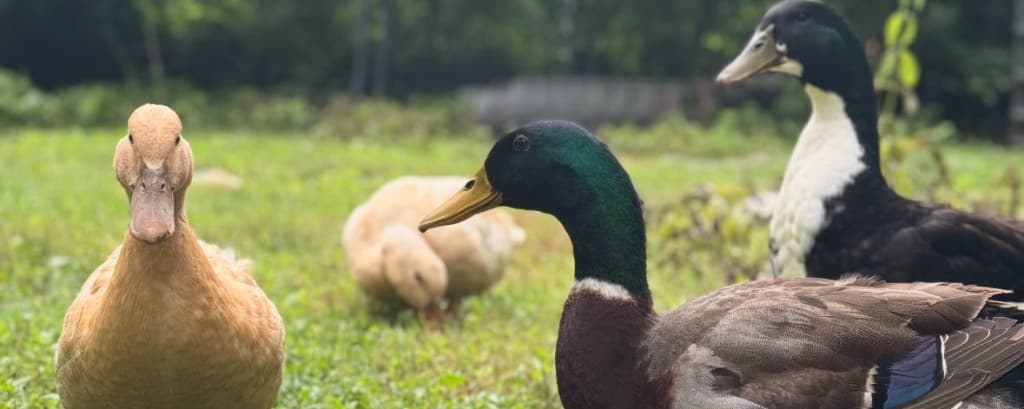
If you’ve spent any time scrolling through homesteading forums or visiting local farms, you’ve likely noticed a shift. While the "starter bird" for decades has been the chicken, a growing movement of poultry enthusiasts is making the case for the duck. If you are on the fence about whether these flat-billed comedians belong on your property, you’ve come to the right place.
Below is an in-depth look at why ducks aren't just an alternative to chickens—in many ways, they are an upgrade.
1. Robust Health and Low-Maintenance Living
One of the most intimidating aspects of raising livestock is the fear of disease. Chickens are notoriously susceptible to respiratory issues, mites, lice, and various "sudden bird death" syndromes. Ducks, by contrast, are the "tanks" of the poultry world.
-
Natural Immunity: Because of their high body temperature and aquatic nature, ducks are naturally resistant to most common avian parasites. You will rarely, if ever, find a duck suffering from the mites or lice that plague chicken coops.
-
Simple Housing: While they need protection from predators at night, ducks don't require complicated roosting bars or elevated nesting boxes. They are perfectly happy with a clean, straw-lined floor in a well-ventilated shed.
-
Cold and Heat Hardiness: Thanks to an incredible layer of down and a thick coating of waterproof oils, ducks are virtually weatherproof. While chickens might suffer frostbit combs in the winter, ducks will happily sit in the snow, tucked into their feathers like little feathered igloos.
2. The Garden’s Best Friend: Pest Control and Fertilization
If you are a gardener, the relationship between you and a flock of ducks is purely symbiotic.
The Lighter Touch
Chickens are "scratchers." They use their powerful claws to dig into the earth, which is great for tilling soil but disastrous for a mulched flower bed or a row of young lettuce. Ducks, however, are "dabblers." They use their bills to sift through the surface of the soil and the undersides of leaves. They will find every slug, snail, and tomato hornworm in your garden without uprooting your hard work.
Liquid Gold for Your Soil
Duck manure is incredibly high in nitrogen, phosphorus, and potassium. Because ducks spend so much time in water, they produce a significant amount of "wash water." Instead of dumping their kiddie pool or pond water into the drain, you can use a bucket or a small pump to distribute it across your garden. This "duck tea" acts as a powerful liquid fertilizer that plants absorb almost instantly.
3. Superior Production: Eggs and Meat
From a purely utilitarian standpoint, ducks are high-performance athletes.
-
The Power of the Duck Egg: A single duck egg is roughly 30% larger than a standard large chicken egg. They have a higher yolk-to-white ratio, making them a favorite for bakers (the extra fat leads to fluffier cakes and richer pastries). Nutritionally, they pack more Omega-3 fatty acids and Vitamin B12 than chicken eggs.
-
Consistency: Many duck breeds, such as the Khaki Campbell or the Welsh Harlequin, can lay 280 to 300 eggs per year. Unlike chickens, who often stop laying during the dark winter months or during a molt, ducks are much more consistent year-round producers.
-
Sustainable Meat: For those raising birds for the table, ducks reach market weight incredibly fast. Because they are efficient foragers, the cost-per-pound of duck meat is often lower than that of high-quality heritage chicken, provided they have space to roam.
4. Behavior, Herding, and Social Dynamics
Ducks are social creatures with a fascinating "pack" mentality. This makes them much easier to manage on a larger property.
-
The Flocking Instinct: If you need to move twenty ducks from a pasture back to their coop, you simply walk behind them. They move as a single cohesive unit. Chickens, by comparison, often scatter in every direction, making "locking up" a much more frantic task.
-
Gentle Personalities: While roosters can famously become aggressive or territorial, drakes (male ducks) are generally much calmer. They rarely attack humans and often become quite attached to their "human flock," recognizing voices and even coming when called.
-
Coexistence: If you already have chickens, don't worry. Ducks and chickens can coexist peacefully. While they have different "languages," they respect each other's space and can often be seen foraging together in the same yard.
5. The Joy Factor: Entertainment and Aesthetics
Let’s be honest: homesteading is hard work, and sometimes you just need a laugh. There is nothing more therapeutic than watching a group of ducks discover a fresh sprinkler or jump into a clean pond for the first time. Their "waddle" is inherently comical, and their constant, quiet chatter adds a peaceful atmosphere to any backyard.
Ducks also add a certain "estate" quality to a property. Whether it’s a pair of snowy white Pekins or a colorful flock of Cayugas with their iridescent green feathers, they are undeniably beautiful animals that enhance the visual appeal of your land.
Conclusion: Is the Duck Right for You?
While they do require a source of water to dip their heads into and they can be a bit "soupy" around their water bowls, the benefits far outweigh the mess. They are hardy, productive, hilarious, and arguably the most efficient "employees" you could ever hire for your backyard ecosystem.