
From Peep to Paddle: The Ultimate Guide to Brooding Ducklings
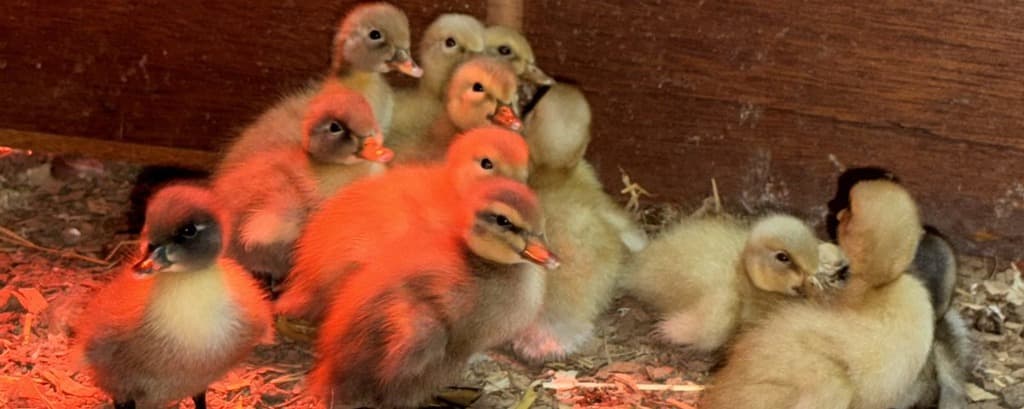
Raising ducklings is a rewarding experience, but unlike chicks, ducklings are high-speed growth machines that live in a permanent splash zone. When you raise them without a mother duck, you become responsible for their temperature, nutrition, and early development.
Here’s how to manage the first eight weeks in the brooder.
1. The Motherless Duckling: You Are the Flock
Without a mother to provide warmth and guidance, ducklings rely entirely on their environment. The goal of brooding is to mimic the protection of a mother’s wings while supplying the specialized nutrition they need to grow extremely fast.
Ducks are highly social. If you are the first thing they see and spend time with after hatching, they will imprint on you. It’s endearing when a line of ducklings follows you everywhere, but remember they view you as their protector.
2. The Brooder Setup: Heat and Bedding
Housing
Use a draft-free, secure container such as a large plastic stock tank or heavy-duty storage bin that is easy to clean.
Heat
Start at 90–95°F for the first week, then lower the temperature by about 5°F each week until you reach outdoor ambient temperature.
You can often judge temperature by behavior:
- Huddled tightly under the heat → too cold
- Pushed far away from the heat → too hot
- Spread out and moving freely → just right
Bedding
- Large-flake pine shavings are the best choice — absorbent and relatively fresh-smelling.
- Avoid cedar (the oils can cause respiratory issues).
- Never use newspaper or other slick surfaces. They can cause splayed leg, a permanent deformity.
3. Hydration: The Wet Reality
Ducks must be able to submerge their entire bill and head. This is how they clear their nostrils and keep their eyes clean.
Approximate daily water needs per bird:
- Week 1: ~½ cup
- Week 2: ~1 cup
- Week 3: ~1½ cups
- Weeks 4–5: 2–3 cups
- Weeks 6–7: 4–5 cups
- Adult: ½ to 1 gallon
Because ducklings love water, they will try to swim in their drinker. Use a guarded waterer or place it on a wire mesh platform so spills drain away from the dry bedding.
4. Nutrition: Fueling Rapid Growth
Ducklings grow much faster than chicks and need more niacin (Vitamin B3) for proper leg and joint development. Standard chick starter is often too low in niacin. Add about one tablespoon of brewer’s yeast per cup of feed to prevent bowed legs, especially in heavy breeds.
By week 8, daily feed intake per bird is roughly:
- Bantam breeds: 2–3 ounces
- Medium breeds: 4–6 ounces
- Heavy breeds: 6–9 ounces
5. Outgrowing the Brooder: The 8-Week Sprint
In just eight weeks a duckling goes from a tiny hatchling to a bird that is nearly full-sized.
- Weeks 1–3: Comfortable in a smaller indoor brooder
- Weeks 4–5: Rapid growth and increasing mess — they usually need more floor space
- Weeks 6–8: They begin replacing down with waterproof adult feathers
Once they are fully feathered (usually around week 8) and nighttime temperatures are no longer freezing, they are ready to move to an outdoor coop.
Raising ducklings is messy, wet, and fast-moving — but watching them go from peep to paddle is one of the most satisfying parts of keeping ducks.